

Not long ago the idea of having 1 terabyte (1TB) of RAM in a single computer felt like science fiction. Most of us are used to hearing about laptops with 8GB or 16GB. Even powerful gaming rigs or workstations often top out at 64GB or 128GB. So, is 1TB RAM possible? The answer is thanks to Gigabyte’s latest tech. It is finally possible and it’s a big deal for the world of computing.
Table of Contents
Why Would Anyone Need 1TB of RAM?
You might wonder, “Why would a computer ever need that much memory?” The truth is, some jobs are just too big for regular hardware. People working in artificial intelligence, scientific research, massive video editing or really big databases need all the memory they can get. More RAM means you can handle much larger projects much faster no waiting around for files to load or programs to finish.
How Does It Actually Work?

The magic behind Gigabyte’s 1TB RAM card lies in a new technology called Compute Express Link or CXL for short. Usually, a computer’s memory (RAM) is limited by how many slots the motherboard has each slot holds one stick of RAM and most motherboards can only fit so many. That’s why getting to 1TB of RAM on a regular desktop or workstation was almost impossible before.
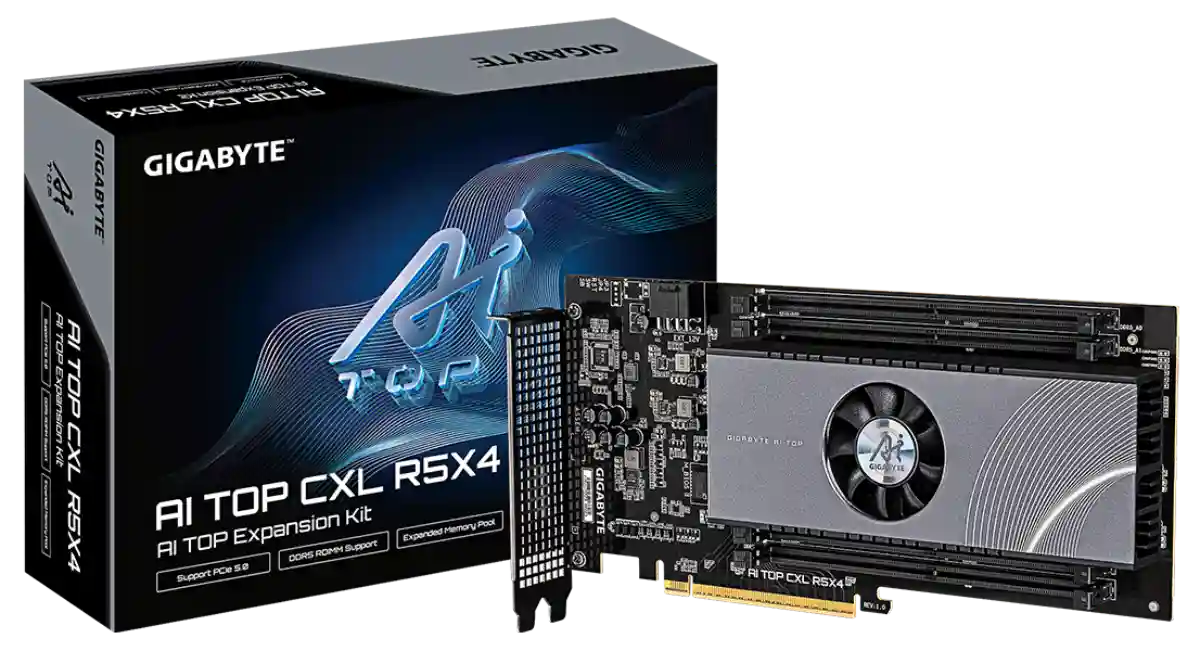
Gigabyte’s card looks like a graphics card but instead of processing graphics. It is packed with memory slots four slots that can each hold large 128GB or 256GB DDR5 memory sticks. You insert this card into a PCIe 5.0 x16 slot. which is a fast, common connection inside computers, originally meant for graphics cards.
What makes this special is the CXL technology inside? which allows this card to talk directly and very quickly to the CPU (the brain of the computer) over PCIe. This creates a new, shared memory pool that the CPU can use almost as if the memory was on the motherboard itself.
Inside the card, there’s also a small controller chip managing how data flows between the CPU and the memory sticks, making sure everything runs smoothly. To handle the heavy work and heat, the card even includes its own cooling system with fans.
However, this card is designed only to work with certain Gigabyte motherboards that support CXL. So it’s not a plug-and-play upgrade for any old PC yet. But for supported systems, it unlocks memory sizes that were previously only possible in expensive server setups.
In short, this card is a powerful add-on that expands your computer’s memory limits without needing a full motherboard upgrade, making 1TB RAM possible for professional workstations.
What’s So Special About this Gigabyte Card?
Before, the amount of RAM you could use depended on how many slots were on your motherboard. Hitting 1TB just wasn’t possible on most regular systems. Gigabyte’s card changes all that by letting you add way more memory through a PCIe slot (the same kind you’d use for a graphics card). It’s aimed at high-end workstations used for things like AI, video editing, and technical design. places where every bit of speed counts.
Can Anyone Use It?
It’s not for average home computers yet. You need a special type of motherboard that supports this new CXL technology and the memory sticks themselves are pretty pricey right now. This card is really for professionals or advanced users who work with huge files, massive projects, or demanding programs. But as with all tech, what’s cutting-edge today often becomes affordable tomorrow.
What Does This Mean for the Future?
Making 1TB RAM possible in a single machine is a huge step forward. It shows how fast computer technology is moving and makes us wonder what’s next? Maybe soon more creators, engineers, and even gamers will have access to these kinds of super-powered machines. For now, it’s a look at what high-end computers will be able to do in the coming years.
Final Thoughts: Is 1TB RAM possible?
1TB of RAM used to sound like a dream, but now it’s finally here. Thanks to innovative minds at Gigabyte and new tech like CXL, computers just got a whole lot more powerful for people who really need that kind of muscle. It’s proof that curiosity and big ideas keep pushing technology forward. Believe me its just the beginning.
Don’t miss this article
LG 720Hz OLED Monitor Unleashed: 2025’s Fastest Gaming Powerhouse


