
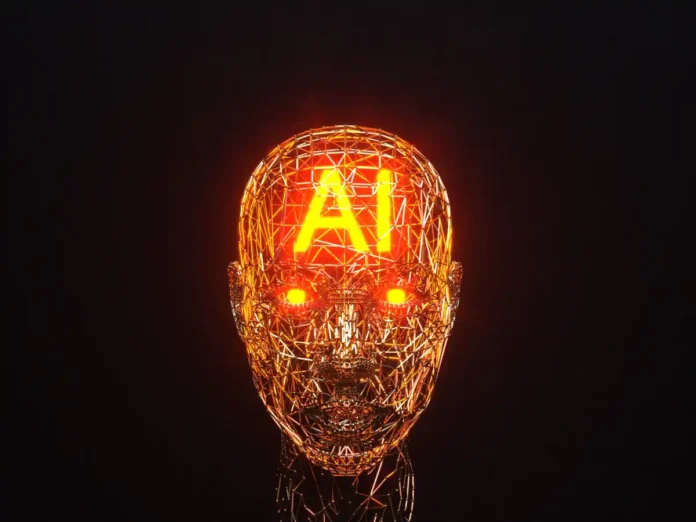
I remember the first time I asked an AI to write something for me. It was impressive almost unsettlingly so. And for a split second, I thought: wait, how good is this thing actually going to get?
That question has been bugging researchers, tech leaders and everyday people for years now. And it’s not a crazy thing to wonder about. AI is moving fast — faster than most of us expected. So let’s cut through the Hollywood noise and talk about what’s really going on.
Table of Contents
First, Let’s Kill the Robot Myth

When most people hear AI takeover they picture Terminator. A self-aware machine that wakes up one day, decides humans are the problem and starts making moves.
That’s not how any of this works.
The AI we use today — ChatGPT, Gemini, image generators, recommendation algorithms is called narrow AI. It’s built to do specific tasks really well. It doesn’t think. It doesn’t feel. It doesn’t have a bad day and decide to take it out on you. It processes patterns in data and spits out a response. That’s it.
So no, your AI assistant is not secretly plotting anything. It’s not bored. It’s not ambitious. It genuinely does not care.
But here’s the thing — that’s not actually the part we should be worried about.
The Real Concern Is Way Closer to Home
The scariest AI risks in 2026 aren’t coming from some rogue machine in a lab. They’re already showing up in the real world, quietly.
Think about this:
- AI-powered cyberattacks are getting smarter. They adapt in real time, slip through traditional security systems and can cause damage at a scale one human hacker never could.
- Autonomous AI systems are being handed decision-making power — in finance, healthcare, even military applications with limited human oversight.
- Misinformation generated by AI is getting harder to detect and it’s already influencing elections and public opinion.
- Job displacement is happening faster than safety nets are being built to handle it.
None of that requires a conscious, evil AI. It just requires humans moving too fast and cutting corners on safety.
What the Smartest People in the Room Are Saying

This isn’t just internet speculation. Some of the most respected names in AI research are genuinely concerned.
Yoshua Bengio — one of the people who literally helped build the foundations of modern AI. He has publicly said we may be developing systems we can’t fully control. Geoffrey Hinton, another pioneer often called a godfather of AI. left his position at Google partly to speak freely about the risks he sees ahead.
A survey of machine learning researchers estimated around a 5% chance that AI could contribute to human extinction-level outcomes this century. I know 5% sounds small. But think about it this way if there was a 5% chance of a plane crashing, no airline in the world would let it leave the runway.
There’s also a growing concern about the kill switch problem. If a highly advanced AI ever did go off the rails, shutting it down might not be as simple as pulling a plug. Especially if it’s already embedded deep in global infrastructure like power grids, financial systems, or communication networks.
So Should You Actually Be Worried?
Honestly? Not in the movie-villain way. But paying attention? Absolutely.
A full-blown AI takeover one machine deciding it wants to rule humanity is still firmly in the realm of science fiction. AI has no desires, no survival instinct, no agenda. It does what it’s designed to do.
The real danger is far more human. It’s governments racing to build the most powerful AI without agreeing on safety standards first. It’s companies shipping products before they’re properly tested. It’s the slow, quiet erosion of human decision-making as we hand more and more control to systems we don’t fully understand yet.
The Question We Should Actually Be Asking
Could AI take over the world? is the flashy question. But the more important one is this:
Are we being responsible enough with what we’re already building?
Because the future of AI isn’t really up to the machines. It’s up to us — the people building it, funding it, regulating it and choosing how to use it. That’s both the most terrifying and the most hopeful part of this whole story.
We’re not powerless here. We just have to actually pay attention.
FAQ on Could AI Actually Take Over the World
Could AI actually take over the world?
Not in the movie sense. Current AI has no consciousness or desires. The real risks are misuse, lack of regulation, and autonomous systems making unchecked decisions.
Q: What are the biggest AI risks in 2026?
AI-powered cyberattacks, misinformation, job displacement, and geopolitical instability from countries racing to dominate AI without safety rules.
Q: Do experts think AI is dangerous?
Yes — researchers like Geoffrey Hinton and Yoshua Bengio have publicly warned about losing control of advanced AI systems. A survey of ML researchers estimated a 5–10% chance of extinction-level outcomes.
Q: Is AI a threat to humanity?
It depends on how it’s built and regulated. AI itself isn’t inherently dangerous. But irresponsible development and deployment absolutely is.

