

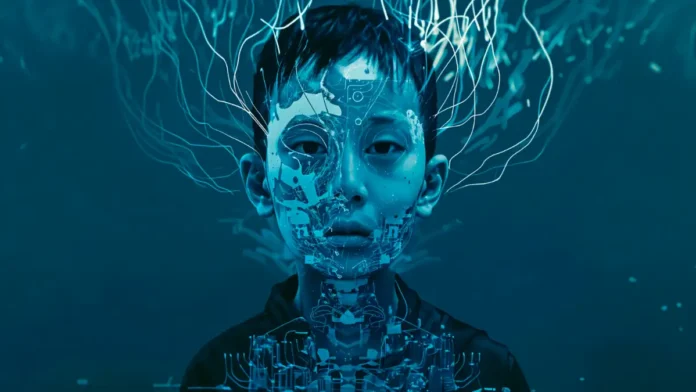
I’ll be honest the first time an AI gave me an answer that actually surprised me, I sat back and thought, okay, that was kind of… smart. But was it really thinking? Or was I just impressed by a very convincing illusion?
That question has been bugging researchers, philosophers and curious people like us for years. So let’s actually talk about it no jargon, no corporate fluff.
Table of Contents
First, What Does It Mean to Think?

This sounds like a simple question. It really isn’t.
When you think about something say, whether to quit your job or move to a new city. You’re not just weighing pros and cons. You’re remembering that one conversation with your dad five years ago. You’re feeling the anxiety in your chest. You’re imagining a future version of yourself and asking if it feels right.
That’s thinking. Messy, emotional, deeply personal thinking.
AI doesn’t do that. It reads through enormous amounts of text, finds patterns in how words connect and generates a response that statistically makes sense. It’s fast. It’s often accurate. But there’s nobody home no feeling, no memory, no stake in the answer.
Okay, But AI Has Gotten Scary Good
Here’s where I’ll give credit where it’s due. AI has come a long way from the clunky chatbots of 2015.
Today’s AI models can hold a real conversation. They can explain quantum physics to a 10-year-old, write a decent cover letter, catch a rare disease pattern in medical data and even write poetry that gives people chills.
Some things that genuinely impressed the research world recently:
- AI models are developing internal ways of categorizing objects and concepts and they surprisingly mirror how the human brain organizes information
- Newer reasoning models now pause” before answering hard questions and work through them step by step, similar to how you’d think out loud solving a tricky problem
- One AI model trained on over 10 million human decisions could predict what people would do next with unsettling accuracy
Is that thinking? It’s something. But it’s still not the full picture.
Here’s Where It All Falls Apart Though
No emotions. No self-awareness. No intuition.
AI can write a heartbreaking story about loss. But it has never lost anyone. It can describe what love feels like based on a million romance novels. But it has never loved. There’s a difference between describing fire and actually being burned.
A few real gaps that matter:
| What Thinking Requires | Humans | AI |
|---|---|---|
| Emotional context | ✅ | ❌ |
| Self-awareness | ✅ | ❌ |
| Gut instinct | ✅ | ❌ |
| Moral judgment (real) | ✅ | ⚠️ Rule-based |
| Original creativity | ✅ | ⚠️ Hit or miss |
| Consciousness | ✅ | ❌ |
AI also gets genuinely confused by things humans find obvious. Sarcasm. Cultural context. The unspoken meaning behind someone’s words. Things you just get because you’ve lived on this planet for decades.
So What Is AI Actually Doing?

The most honest explanation I’ve ever heard: AI is autocomplete on steroids.
It doesn’t understand your question the way a friend would. It calculates the most likely sequence of words that fits the pattern of your input. That’s it. Remarkable engineering. But not thinking in the way you and I mean it.
AGI — Artificial General Intelligence is the term researchers use for an AI that could genuinely reason, learn and think across all areas of life the way humans do. It’s the goal. It’s also still very much unsolved. Some of the brightest minds in tech think it’s decades away. Others think we’ll never fully get there.
Quick Answers If You’re Searching for This
Can AI think like humans?
Not really. It can simulate reasoning and language well, but it has no emotions, no consciousness and no real understanding. Just very advanced pattern matching.
What separates human intelligence from AI?
Humans think with emotion, experience, intuition and self-awareness. AI works with data and statistics. One lives life. The other reads about it.
Is AGI possible?
Most experts say yes, eventually but we’re nowhere near it right now.
The Part Everyone Gets Wrong About AI
People either think AI is about to take over the world or they completely dismiss it as a glorified search engine. Both are wrong.
The real story is quieter and more interesting. AI is becoming a thinking partner — not a replacement. Surgeons use it to spot what the human eye misses. Teachers use it to personalize lessons. Content creators use it to move faster without losing their voice.
The people doing best right now aren’t the ones fighting AI or blindly trusting it. They’re the ones who understand what it’s good at, know where it fails and fill in the gap with their own human judgment.
My Honest Take on Can AI Think Like Humans
Six years ago I started using AI tools in my content work. Back then it felt like a novelty. Now it’s part of how I work every single day for research, drafting, ideation, SEO strategy, everything.
But here’s something I’ve noticed that I don’t see people talk about enough: the more AI improves, the more readers crave real human voice. They can feel the difference. Not always consciously — but they feel it. A robotic article technically covers the topic. A human article makes you feel like someone actually cares whether you understand it.
That’s the thing AI cannot fake, no matter how advanced it gets — the feeling that a real person sat down and thought hard about what you needed to hear.
So no, AI cannot think like humans. Not yet. Maybe not ever in the full sense.
But honestly? That’s not a bad thing. It means your perspective — your specific brain, your experiences, your weird little opinions still matters. Maybe now more than ever.

