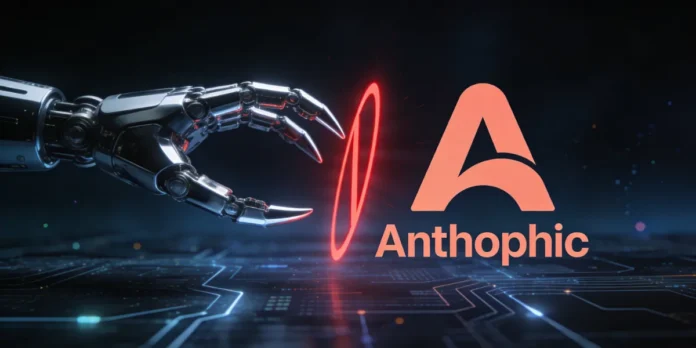
If you’ve been using OpenClaw to run Claude-powered agents on a subscription plan, that workflow is gone. Anthropic has officially blocked third-party tools from using Claude subscription tokens and the consequences are playing out across the entire AI agent space right now.
Here’s everything you need to know, broken down clearly.
What Is OpenClaw?
OpenClaw is an open-source AI orchestration framework. In plain terms it connects large language models like Claude, GPT-4, DeepSeek, even locally-run models to everyday messaging apps like WhatsApp, Telegram and Discord. Its letting you automate tasks and run AI agents without writing complex code.
It grew to over 180,000 GitHub stars and 2 million weekly active users, making it one of the most widely adopted AI agent tools ever built. The reason for its explosive growth was simple: users could run serious agentic workloads through a $200/month Claude Max subscription instead of paying Anthropic’s much higher pay-per-token API rates. Some users were reportedly getting $1,000 to $5,000 worth of compute for that flat monthly fee.
That’s exactly why Anthropic pulled the plug.
How the Ban Unfolded: A Clear Timeline
- January 2026 — Anthropic silently deploys server-side blocks. Users start seeing 403 errors with a message stating their credentials cannot be used for other API requests. No warning, no grace period.
- February 19, 2026 — It formally updates its compliance documentation, explicitly prohibiting the use of OAuth subscription tokens in any third-party tool or agent framework.
- Ongoing — Subscription throttling introduced during peak hours, further limiting heavy users on Free, Pro, and Max plans.
Anthropic’s technical staff publicly noted that OpenClaw-style tools were generating unusual traffic patterns without any of the usual telemetry meaning Anthropic had no visibility into how their infrastructure was being used or by whom.
The Big Plot Twist: OpenClaw’s Creator Moved to OpenAI
Just as Anthropic was locking OpenClaw out. OpenAI made a very public move in the opposite direction.
In mid-February 2026, OpenAI CEO Sam Altman announced that OpenClaw creator Peter Steinberger was joining the company to lead personal agent development. Steinberger confirmed that OpenClaw would continue under an open-source foundation backed by OpenAI.
The tool Claude banned now has its biggest competitor’s full support. Whether that timing was strategic or coincidental. It handed OpenAI a developer community of millions and made Anthropic look like they scored an own goal.
Anthropic’s Response: Claude Cowork

Rather than working with the open-source community, Anthropic built its own closed alternative. Claude Cowork launched in January 2026 for Max subscribers, bringing autonomous agent capabilities to non-technical users. In March, Claude Code Channels added Discord and Telegram integrations — directly mirroring OpenClaw’s core appeal.
Here’s how the two compare openclaw vs claude cowork
| Feature | OpenClaw | Claude Cowork |
|---|---|---|
| Cost | Free + API credits | $20–$200/month |
| AI Model Support | Claude, GPT-4, DeepSeek, local | Claude only |
| Messaging Apps | WhatsApp, Telegram, Discord | Discord, Telegram |
| Open Source? | Yes (MIT licence) | No |
| System Access | Full | Sandboxed |
| Backed By | OpenAI Foundation | Anthropic |
Claude Cowork is polished and officially supported, but it’s Claude-only, costs more and offers far less flexibility. For power users who depended on OpenClaw, it’s not a like-for-like replacement.
What Are Users Doing Now?
Three main migration paths have emerged from the OpenClaw community:
- Move to Anthropic’s direct API — the official path, but costs can spike 5x or more overnight for heavy workloads
- Switch AI providers — GPT-4 and open-source models via Ollama are the most popular alternatives
- Use community forks — NemoClaw and KiloClaw have already emerged as drop-in replacements with active development
It’s also worth noting that OpenClaw is massive in China, where Anthropic and OpenAI don’t commercially operate. Tencent, Alibaba and ByteDance all built products on top of it. Anthropic’s ban effectively handed that entire market to open-source alternatives overnight.
Frequently Asked Questions
Is OpenClaw still working in 2026?
OpenClaw no longer works with Claude subscription tokens as of February 2026. It still functions with other AI providers like GPT-4 and local models and continues to be maintained as an open-source project under OpenAI’s backing.
What is the best OpenClaw alternative in 2026?
Claude Cowork is Anthropic’s official alternative, but community forks like NemoClaw and KiloClaw are gaining traction. Users seeking multi-model support should consider GPT-4-based workflows or locally hosted models via Ollama.
Why did Anthropic ban OpenClaw?
Anthropic banned OpenClaw because users were running thousands of dollars worth of AI workloads through flat-rate subscription plans, creating unsustainable cost exposure and unmonitored infrastructure usage.
Will OpenClaw work with OpenAI models?
Yes. With Peter Steinberger now at OpenAI and the project backed by an OpenAI-supported foundation. OpenClaw is expected to deepen its compatibility with OpenAI’s model ecosystem going forward.
The Bottom Line
Anthropic’s OpenClaw ban is a calculated business decision but it came with real costs. The open-source community is adapting, the framework’s creator has defected to a rival and a ready-made global user base now sits in OpenAI’s court.
The era of cheap subscription-powered AI agents is over. What comes next will be shaped by how well OpenAI leverages what Anthropic pushed away.

